
Review · SPAIN
Santoña: Anchovy Art Gallery with Fishing Port and Market
Santoña’s anchovies are not simply a snack in a tin. They are the reason for a working port, a local trade, and a careful food tradition that reaches back to Sicilian fish workers. This experience connects those pieces, taking you from the harbor and fish market to the Anchovy Art Gallery at Conservas Ana María.
I like the port visit because you see how the catch moves from boat to auction. I also like the gallery’s old machinery and the live filleting demonstration, where the work is done in front of you rather than hidden behind a shop counter. Guide Nicolás C. adds useful context and can lead the tour in Spanish, French, or English.
The main drawback is that this is a focused food and port experience, not a broad sightseeing tour of Santoña. If you want castles, beaches, or a long museum visit, you will need to add those separately. The port may also be quieter than expected depending on the day’s activity.
Key points to know before booking
- See a working fishing port: Learn how purse seine boats operate, read ship registrations, and understand how the day’s catch reaches the auction.
- Visit Conservas Ana María: The gallery includes antique machinery from the early 20th century and explains the local anchovy trade.
- Watch anchovy filleting: A skilled worker demonstrates the careful handwork behind the finished product.
- Taste the result: Your admission includes freshly prepared anchovy fillets at the gallery’s bar or shop.
- Travel with Nicolás C.: He explains the subject in Spanish, French, or English and uses both physical and online material during the visit.
- Good value at $20: The price covers the guided experience, gallery entry, and tasting, with free cancellation up to 24 hours ahead.
Why Santoña’s anchovies deserve a closer look
Santoña sits on Cantabria’s coast, where fishing is not just a backdrop for a seaside holiday. The port supports a food tradition that has shaped the town’s identity, and anchovies are its most famous product.
This tour works because it shows you the whole chain. You begin with boats and the catch. You then see the factory side of the business, including the machines and human skill needed to turn small fish into a prized local food. You finish by tasting the product while the details are still fresh.
I find that order useful. A tasting on its own can be pleasant but forgettable. After you have seen the auction process and watched someone remove the bones and prepare the fillets by hand, the taste has a clear connection to the work behind it.
The tour also explains the Sicilian origins of anchovy filleting in the Cantabrian Sea. That detail gives the local industry a wider European setting. Santoña’s food traditions did not develop in isolation, and the Sicilian connection helps explain how methods and skills crossed borders.
More fish market visits around Spain:
- Cooking Class Hoi An:Local Market, Basket Boat, Fishing & Cooking
★ 5.0 · 3,660 reviews - Hoi An: Cooking Class, Crab Fishing-Basket Boat, Market Tour
★ 4.8 · 108 reviews - Local market, Basket boat, crab fishing & cooking class
★ 5.0 · 2 reviews
Starting beside the marshes and Santoña port
You meet at the Mirador de las Marismas, by the port of Santoña. This is a sensible starting point because it places you beside the harbor rather than in a classroom or generic visitor center.
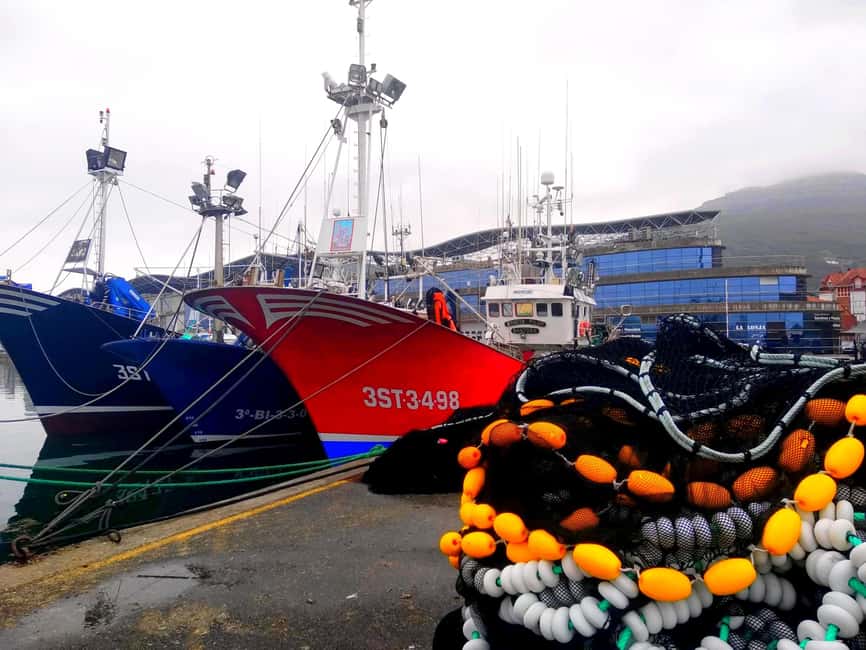
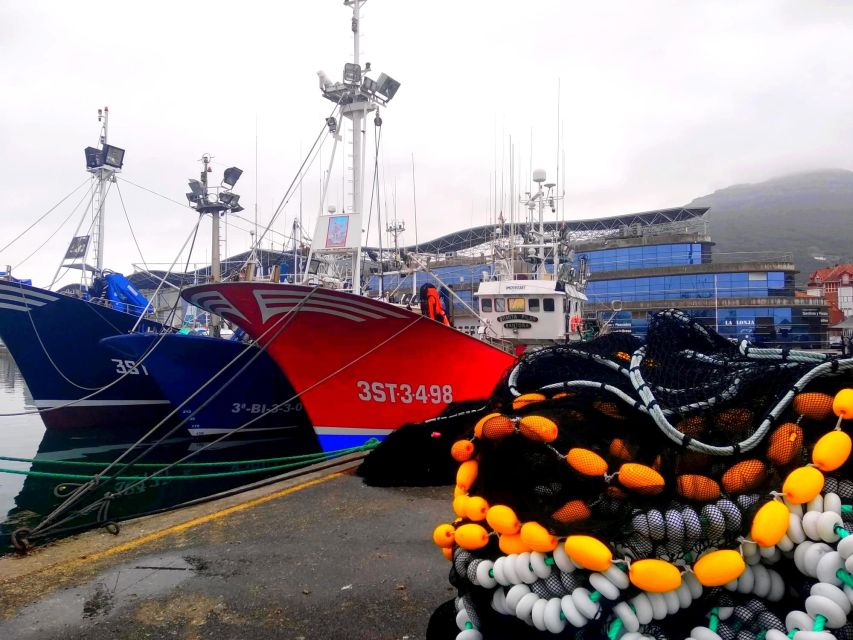
The first part focuses on the port’s daily workings. You learn about purse seine vessels, the boats that gather fish by drawing a large net around the catch. You also learn how to read ship registrations, a small but useful skill that helps you make sense of the boats lined along the waterfront.
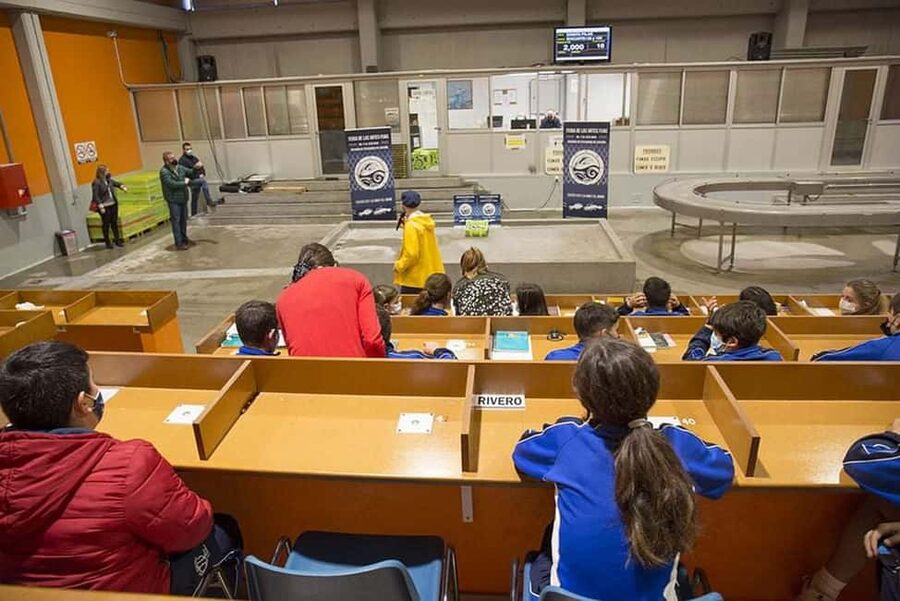
The guide then explains the auction process, where the day’s catch is sold. This is the part that gives the experience its working-port character. You are not only looking at boats for a photograph. You are learning what happens after they return and how the catch enters the local food economy.
The exact amount of visible activity can depend on the port schedule. A fishing harbor is a workplace, not a staged attraction, so you should not expect every part of the auction to be at full speed during every visit. The explanation still has value, but the most active scenes will depend on the day.
There is also a short photo stop at the port. It is brief, so treat it as a chance to record the setting rather than a separate sightseeing session. Keep your attention on the guide during the main walk, then use the photo pause for the harbor views.
Reading the boats and understanding the auction
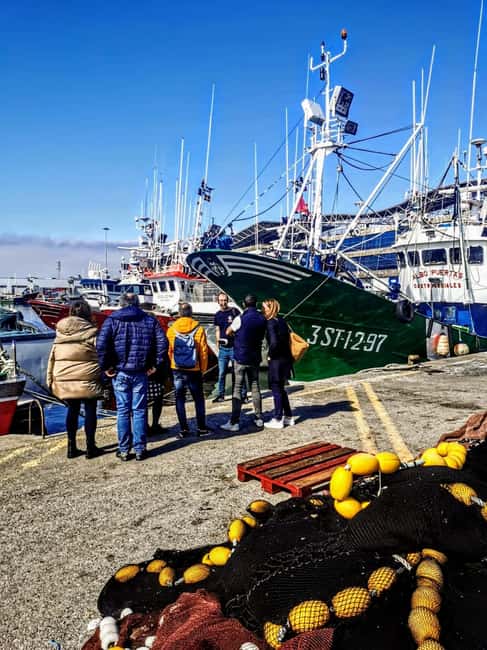
The port section is strongest if you enjoy knowing how a place operates. You learn what the boats do, how their registrations identify them, and how the auction connects fishermen with buyers.
That practical information changes the way you see a harbor. Without it, a row of boats can blur into one pleasant coastal view. With it, you start noticing the difference between a working vessel and a decorative boat, and you understand why the auction matters to the town.
I especially like the focus on purse seine vessels. It gives you one clear piece of fishing vocabulary instead of a long list of technical terms. You leave with a better sense of how the catch is gathered and sold, not just a handful of facts about local seafood.
The port walk is also a good match for visitors who want an everyday side of Cantabria. It is less polished than a formal museum and that is part of its appeal. You are seeing a trade that still depends on boats, workers, timing, and a market.
Inside the Anchovy Art Gallery at Conservas Ana María
The next main stop is the Anchovy Art Gallery at Conservas Ana María. Here, the subject shifts from the harbor to the preparation of the fish.
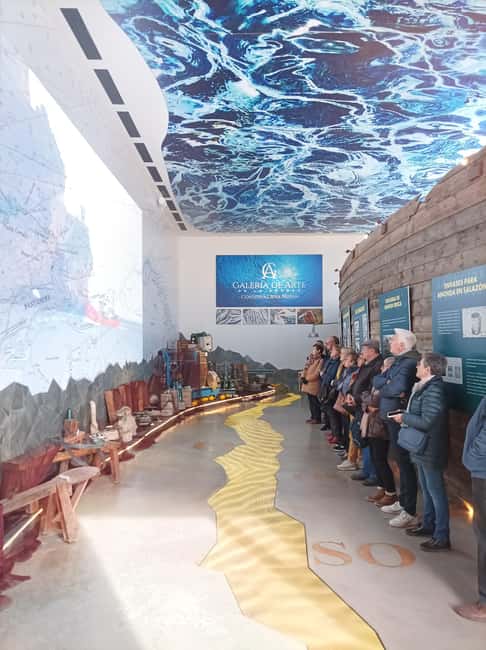
The collection includes antique machinery dating from the early 20th century. These machines help show how the industry worked before modern food production became less visible to the public. You can connect the equipment with the stages of processing rather than treating the anchovy as a finished item that simply appears on a shelf.
The gallery also tells the story of Sicilian influence on anchovy filleting in the Cantabrian Sea. That is one of the most interesting parts of the visit because it links local production to migration, skill, and shared coastal foodways.
Do not expect a large art museum in the usual sense. The gallery is centered on anchovy production, industrial objects, and food history. Its value comes from the close connection between the displays and the product you will taste later.
Nicolás C. is an important part of the experience. He explains the subject with care and uses online and physical material when useful. That can help if you are unfamiliar with fishing terms or if you want more than a quick factory talk.
Same water, a different rod:
- World Class Fishing Charter Trip in Tenerife
★ 4.5 · 110 reviews - Adeje: 3.5–Hour Professional Fishing Experience
★ 4.3 · 107 reviews - Fishing Trip all included
★ 4.3 · 77 reviews - Fishing trip, Tenerife Sea Passion
★ 4.5 · 68 reviews
Watching an anchovy become a fillet
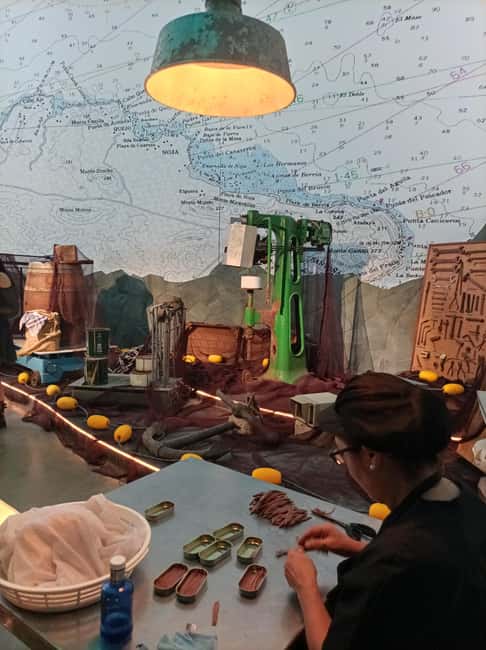
A skilled worker demonstrates how anchovies are filleted. This is the moment when the production process becomes human and precise.
Filleting looks simple when you see only the finished fish. In practice, the demonstration shows the care needed to prepare the anchovy properly. You see the work that goes into producing a clean fillet, and you gain a better idea of why careful preparation affects both texture and price.
The demonstration also gives the tour a useful balance. The port section explains where the fish comes from. The old machinery shows how the industry developed. The worker’s hands show the final craft.
For me, this is more valuable than a standard tasting with a short label beside each sample. You are not just told that the product is traditional. You are shown part of the method that makes it special.
The presentation is also a good place to ask questions. Nicolás speaks Spanish, French, and English, so you can choose the language that lets you follow the technical details most easily. His explanations cover both the history and the practical side of anchovy work.
The tasting at the gallery bar and shop
The tour ends with a tasting of freshly prepared anchovy fillets at the bar or shop inside the gallery. The tasting is included in the $20 price, along with entry to the gallery.
This is not a large meal. Think of it as a focused sample of the product you have just learned about. The point is to notice the flavor and texture after seeing the steps behind the preparation.
I like that the tasting comes at the end. You have already learned about the port, the auction, the Sicilian connection, the machinery, and the filleting method. That background gives the food more meaning without turning the tasting into a lecture.
The anchovy is the star, so this is best for people who already enjoy savory seafood or want to try a signature Cantabrian product. If you dislike anchovies, the historical and industrial parts may still interest you, but the final tasting will naturally be less rewarding.
The gallery’s bar and shop also give you a practical place to continue exploring the product after the guided portion. The supplied details do not specify additional purchases or products, so consider the tasting the confirmed part of the visit.
Is $20 a fair price?
At $20 per person, this is a good-value experience if you want more than a quick look at Santoña’s harbor. The price includes the guided port visit, entry to the Anchovy Art Gallery, the filleting demonstration, and an anchovy tasting.
The value comes from the combination. You are paying for local interpretation, not simply access to a room or a sample. The port walk provides the setting, the gallery provides historical and industrial context, and the tasting gives you a direct connection to the finished product.
I would judge the price differently if the tour were only a short tasting. In that case, $20 might feel high for a small portion of food. Here, the guide’s explanations and the two-part visit make the cost easier to justify.
This is also a useful choice if you have limited time in Santoña. You get an introduction to an important local trade without having to plan separate visits to the port, a food producer, and a tasting stop. The activity information gives a one-day validity, while the listed stops are concentrated around the port and gallery.
What the guide adds to the experience
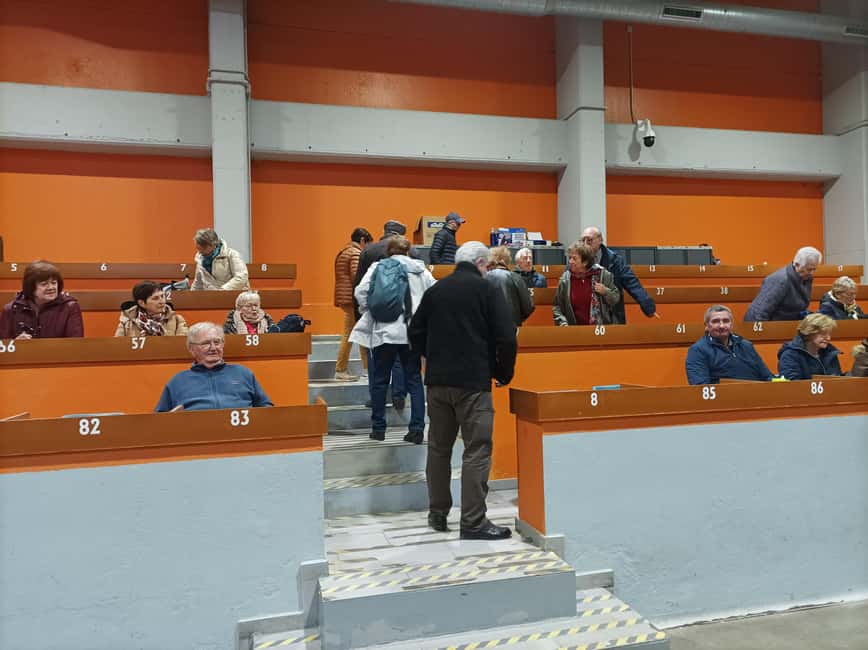
Nicolás C. receives particularly strong praise for his explanations and his command of the subject. He is described as fluent and informative about Santoña’s anchovy activities and history, with a clear effort to make the material easy to follow.
That matters here because the topic can become technical. Purse seine fishing, ship registrations, auctions, processing, and filleting are not self-explanatory. A guide who can move between history and practical detail makes the visit far more useful.
He also brings both online and physical material. That is a small but meaningful advantage. If you do not recognize a type of vessel or cannot picture an earlier stage of production, extra visual material can make the explanation clearer.
The available languages are Spanish, French, and English. You should select the language that suits you when booking or checking availability, since the quality of a port and food tour depends heavily on understanding the guide.
Who should book this Santoña experience?
I would choose this tour if you enjoy:
- Local food with a clear link to place and work
- Working ports rather than purely scenic waterfronts
- Small museums and industrial displays
- Fishing history and traditional production methods
- Tastings that explain the product before serving it
- Guided visits in Spanish, French, or English
Families with older children may also find it useful because the boats, auction, machinery, and handwork offer several kinds of interest. The data does not specify a minimum age, group size, or accessibility details, so check those points before booking if they matter to you.
I would skip it if your main goal is a full day of beach time, a broad tour of Cantabria, or a substantial meal. The food element is a tasting, not a restaurant lunch, and the subject stays firmly on Santoña’s port and anchovy trade.
You should also allow for the nature of a working harbor. The tour can explain how the port functions, but it cannot guarantee that every stage of fishing or auction activity will be at its busiest when you arrive.
Booking flexibility and practical details
The activity offers free cancellation up to 24 hours before the scheduled start for a full refund. You can also reserve now and pay later, which helps if you are still arranging your Cantabria plans.
It is valid for one day, and you need to check availability for the starting time. The tour returns to the Mirador de las Marismas and Santoña port area after the gallery visit.
The listed route includes a guided port visit, a short photo stop, and about 40 minutes at Conservas Ana María for the gallery, demonstration, and tasting. The port section is described as a guided tour, though the supplied timing contains an apparent error, so confirm the exact schedule when reserving.
Should you book the Anchovy Art Gallery tour?
Book it if you want to understand why Santoña’s anchovies matter, not merely buy a tin and move on. The combination of port operations, auction details, old machinery, Sicilian food history, live filleting, and tasting gives you a clear picture of the local trade.
I would make it a priority for food-focused visitors and anyone curious about working coastal communities. Nicolás C.’s strong command of the subject adds real value, especially when he uses visual material to explain the boats and production methods.
Skip it only if anchovies hold no appeal and you have very little interest in fishing or food production. For $20, this is a compact and practical way to meet Santoña through one of its defining products.
FAQ
Where does the tour start?
The tour starts at the Mirador de las Marismas, by the port of Santoña.
What places does the experience include?
It includes a guided visit around Puerto de Santoña and a visit to the Anchovy Art Gallery at Conservas Ana María.
Is anchovy tasting included?
Yes. The price includes a tasting of anchovy fillets at the bar or shop inside the Anchovy Art Gallery.
What can I learn at the port?
You can learn about purse seine vessels, ship registrations, and the auction process used to sell the day’s catch.
What is displayed at the Anchovy Art Gallery?
The gallery contains antique machinery dating from the early 20th century and explains the history of anchovy processing in the Cantabrian Sea.
Which languages are available?
The live guide service is available in Spanish, French, and English.
Can I cancel the booking?
Yes. You can cancel up to 24 hours in advance for a full refund. You can also reserve now and pay later.
New trips around Spain
- Santa Cruz de Tenerife: Private Family Fishing Tour★ 4.9 · 7 reviews
- From Puerto Colón: Private Fishing Boat Charter with Lunch★ 4.4 · 6 reviews
- Fishing Boat Trip in Mallorca★ 4.7 · 24 reviews
- Fishing for kids★ 4.4 · 9 reviews
- Estepona: Fishing Tour StartFisher 1060★ 4.8 · 11 reviews
- Barcelona: Coastal Fishing Trip★ 4.0 · 4 reviews
- Barbate: Boat Tour to the Almadraba of Conil (Tuna Fishing)★ 4.4 · 11 reviews
- Fuengirola: 4h Trolling Fishing Trip with Snacks and Drinks★ 4.7 · 6 reviews
Spain Fishing Trips, compared.
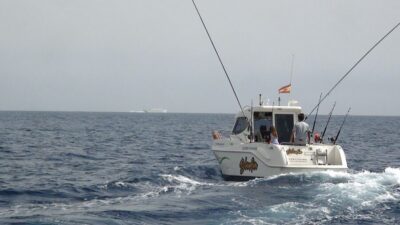
Adeje: 3.5–Hour Professional Fishing Experience
Read our review →
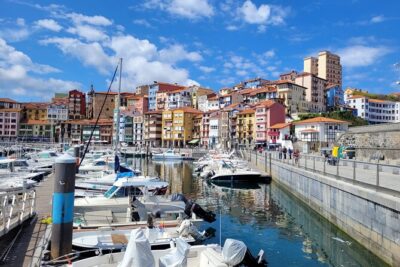
Hike Gaztelugatxe, Fishing Port Bermeo & Pintxo Lunch from Bilbao
Read our review →
Hiking Cliffs & Old Fishing Trails around Moraira OFFICIAL GUIDE
Read our review →Browse the lists this tour appears in